

You Do Not Need to Become a Full-Time Entertainer to Market Your Business


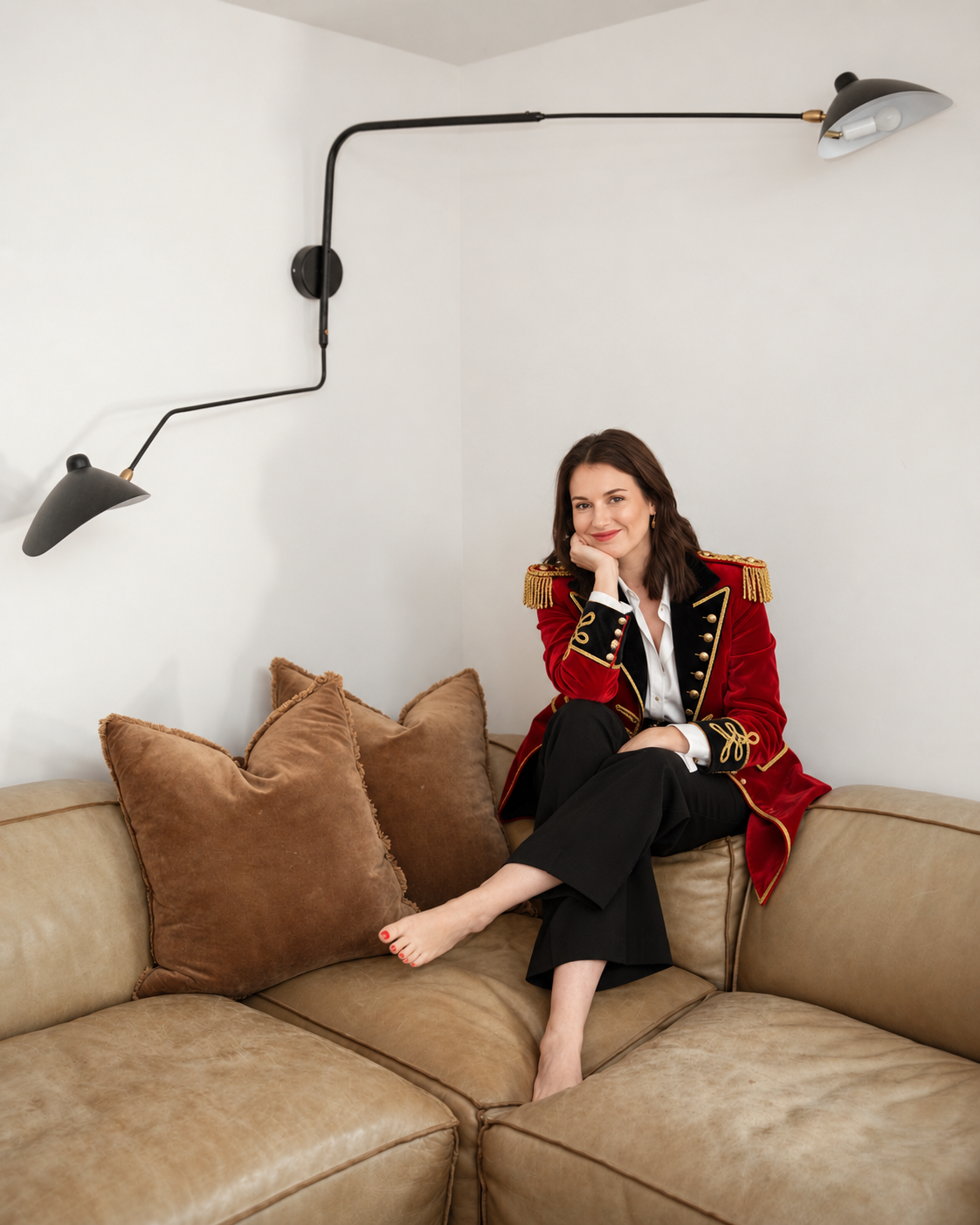
Somewhere along the way, owning a business apparently started requiring a minor in theatre.
After this long in marketing, design and business strategy, I can pull a few rabbits out of a hat. I’ve worked with enough teams, clients, suppliers, launches, deadlines and assorted chaos to probably qualify as a ringmaster too. But other than asking AI to dress me like one for a social media post, that is about as far as I am willing to take the performance side of running a business online. Because this is the bit I think we have all quietly accepted as normal: you start a business because you are good at something, and then almost immediately the internet asks you to also become a content creator.
You are an interior designer? Great. Please now learn video editing.
A florist? Wonderful. Can you lip-sync?
A consultant? Excellent. We are going to need three talking-head Reels a week, a strong personal brand, a little bit of vulnerability, perhaps a day-in-the-life, and ideally something involving text floating around your head while you point at it.
And apparently you should look thrilled about all of this.
I work in marketing, so I am not going to sit here and tell you content does not matter. It absolutely does. But content and business are not the same thing, and I think a lot of business owners have accidentally built themselves a second full-time job trying to keep up with social media.
The whole thing gets even stranger when you are someone like me, because I am actually quite happy talking. Too happy, perhaps. Give me the right person and enough coffee and I can start one story, wander through three completely unrelated backstories, tell you what a proverbial friend did in a similar situation last year, forget my original point entirely and somehow still land somewhere useful. Ask me to deliver “three key points” to camera in 27 seconds, however, and suddenly I have forgotten how language works. That is not because I do not know what I am talking about. It is because performing expertise and having expertise are not the same thing.
Your marketing should support the business, not consume it
This is the distinction I think matters most: The job of your marketing is to help the right people understand who you are, what you do, what you are good at and why they might want to work with you. It is not to turn you into a full-time entertainer who occasionally remembers there are invoices to send.

A lot of small business owners assume they have a content problem when what they really have is a clarity problem. They are posting constantly, but the offer is still confusing. They are making Reels every second day, but the website does not explain what they actually do. They are showing up religiously on Stories, but there is no clear point of view tying any of it together.
More content does not automatically mean better marketing. Thirty mediocre posts cannot fix unclear positioning. A viral Reel cannot make a confusing service suddenly easy to buy. And ten thousand followers are not particularly useful if none of them understand why they should hire you.
This is why I will always start with strategy before content.
Before you worry about what to post, work out what the business actually needs to communicate. Who are you trying to reach? What are they trying to solve? What do you want to be known for? What makes the way you do it different? What would somebody need to see or understand before they felt confident getting in touch?
Once you have those answers, content becomes much easier because you are no longer turning up every Tuesday morning thinking, Jesus Christ, what am I supposed to say today?
You are allowed to create content in a way that actually suits you
There is no prize for choosing the content format you hate most.
If sitting in front of a camera makes your entire body recoil, you do not need to build your marketing strategy around daily talking-head videos just because somebody on Instagram told you that “face-to-camera is converting really well right now”.
There are so many ways to communicate expertise without performing like a trained monkey for the algorithm.
You can write. You can photograph your work. You can show a process. You can share a client question and answer it in a caption. You can create a carousel that explains how you think. You can document the before and after of a project. You can turn an email you have written twenty times to clients into a useful piece of content. You can record a conversation instead of reading a script. You can have somebody ask you questions off camera and simply answer them like a normal human being.
And perhaps most importantly, you can make fewer things and make them better.
If I were building a content strategy for someone who hates the idea of “showing up” constantly, I would start here:
Choose formats that feel natural. If you write well, write. If you explain things brilliantly in conversation, record conversations. If your work is visual, let the work do some of the talking.
Create from the business, not for the algorithm. Client questions, projects, mistakes, decisions, conversations and things you are already explaining every week are usually your best content.
Develop a few strong themes. You do not need a new personality every time you post. Pick a handful of areas you genuinely know something about and keep returning to them from different angles.
Use your actual voice. If you would never say “Here are three game-changing tips to level up your brand”, please do not suddenly start saying it on Instagram.
Repurpose without shame. One good idea can become a blog, carousel, email, caption, Reel and conversation. You do not receive extra points for having a completely original thought seven days a week.
Let some things simply exist. Not every photo needs a lesson. Not every Story needs to sell. Sometimes showing the work, the process or a glimpse behind the scenes is enough.
Your personality does not need to become the product
I am a big believer in personal brands, particularly for service businesses. People want to know who they are hiring. They want to understand your perspective, how you think and whether you seem like someone they could actually spend time working with. But there is a very big difference between having a personal brand and turning your entire life into content.
You do not need to film breakfast because you run a consultancy.
You do not need to share your morning routine because you design websites.
You are allowed to go for a walk without creating a “POV: resetting after a big client week” Reel when you get home.
There are parts of my life I share because I find them interesting or funny or they genuinely connect to the way I see the world. There are also plenty of parts I do not. That is not bad marketing. It is just having a life. The strongest personal brands, in my opinion, are not the ones where you know absolutely everything about someone. They are the ones where you understand them.
You know their point of view. You know what they care about. You know the kinds of problems they solve and the way they approach them. You recognise their tone before you even see their name. That is branding. Knowing what they ate for lunch on Tuesday is optional.
You do not need to prove your expertise every morning
There is another slightly exhausting idea floating around online that expertise must be continuously demonstrated or people will somehow forget you have it. I do not think clients work like that. Nobody is sitting at home thinking, “I was going to hire that architect, but she has not posted a tip since Thursday, so I am questioning the whole thing.”
Your expertise exists in the body of work.
It exists in how you speak about the work.
It exists in the questions you ask, the ideas you have, the way you solve problems and the experience people have working with you.
Content can communicate those things, but it does not create them. And I think that is a useful distinction for business owners who feel like they are constantly behind online.
You do not have to wake up every morning and perform your credibility for strangers.
You just need enough useful, clear, consistent communication for the right people to find you, understand you and remember you.
That is a very different brief.
Build a business worth talking about first
I think this is where I land on all of this. I do not want to discourage business owners from showing up online. Social media can be incredibly powerful. I have built businesses, launched offers, found clients, sold work and made some genuinely excellent connections through it. But I think your content should come from the business, not become the business.
Do interesting work. Solve real problems. Develop opinions. Pay attention to what clients keep asking you. Notice the mistakes people make before they come to you. Notice what you find yourself explaining again and again. Notice the bits of your work that make you think, More people should know this.
Then talk about those things. That is a content strategy I can get behind.
I will happily keep pulling a few rabbits out of hats behind the scenes. I will keep wrangling the occasional circus. I will even let AI put me in a ringmaster costume when the situation calls for it. But I have absolutely no intention of becoming a full-time entertainer just because I own a business. And neither do you.